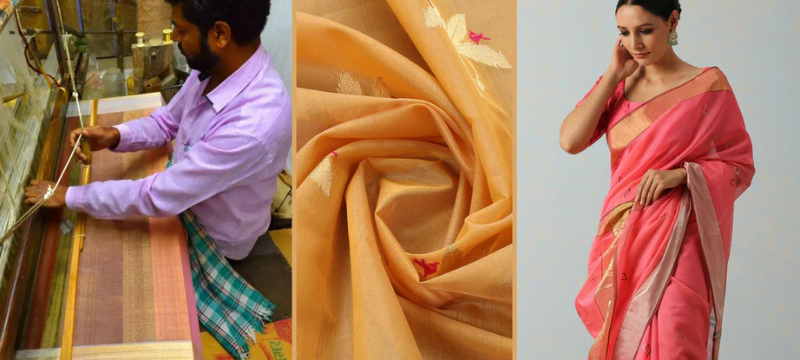
Chanderi sarees are more than elegant drapes — they are a living symbol of India’s handloom heritage. Known for their sheer texture, lightweight feel, and understated luxury, Chanderi sarees have travelled from royal courts to global wardrobes, carrying centuries of craftsmanship with them.
The Origins of Chanderi Weaving
The town of Chanderi, located in Madhya Pradesh, has been a prominent weaving centre for over a thousand years. Its strategic location along ancient trade routes helped it flourish as a cultural and commercial hub. Royal patronage from Rajput and Mughal rulers further elevated the status of Chanderi textiles, making them a preferred choice for nobility.
Legends suggest that weaving in Chanderi dates back to the Vedic era, with techniques refined over generations. What began as a local craft soon became a symbol of refined taste and elegance.
What Makes Chanderi Sarees Unique
Chanderi sarees are instantly recognisable due to their:
Feather-light texture
Subtle sheen
Soft transparency
Fine handwoven finish
Unlike heavier silks, Chanderi sarees are breathable and comfortable, making them ideal for India’s climate. Their beauty lies in simplicity — graceful, not loud.
Fabrics and Materials Used
Traditional Chanderi sarees are woven using:
Pure silk
Fine cotton
Silk-cotton blends
The silk yarn gives the saree its signature glow, while cotton adds softness and durability. This balance is what makes Chanderi sarees suitable for both festive occasions and everyday elegance.
Traditional Motifs and Designs
Chanderi sarees are known for their minimal yet meaningful motifs, woven directly into the fabric rather than embroidered later. Popular motifs include:
Ashrafi (coin motifs)
Peacock
Lotus and floral patterns
Swans
Geometric borders
Many designs are inspired by nature, architecture, and the surroundings of Chanderi itself.
The Handloom Process
Every authentic Chanderi saree is handwoven on a traditional loom. The process is meticulous and time-consuming:
Yarn preparation
Designing motifs
Setting up the loom
Manual weaving
A single saree can take days or even weeks to complete. The skill involved is passed down through generations, often within the same family.
Pranpur – The Weavers’ Village
Just outside Chanderi lies Pranpur, a handloom village where artisans continue this centuries-old tradition. Visitors can observe live weaving, interact with craftsmen, and understand the effort behind each saree. This connection between artisan and fabric makes Chanderi sarees deeply personal.
Global Recognition and Modern Appeal
Over time, Chanderi sarees have gained international appreciation for their elegance and sustainability. Designers now reinterpret traditional patterns with modern colour palettes, making them popular among younger generations as well.
Why Chanderi Sarees Are World-Famous
Their versatility, comfort, heritage value, and timeless appeal have earned Chanderi sarees a place on global platforms. Owning one is not just a fashion choice — it is a tribute to Indian craftsmanship.
Conclusion
Chanderi sarees represent grace woven with history. Each drape tells a story of tradition, patience, and artistry — making them truly timeless and world-famous.